
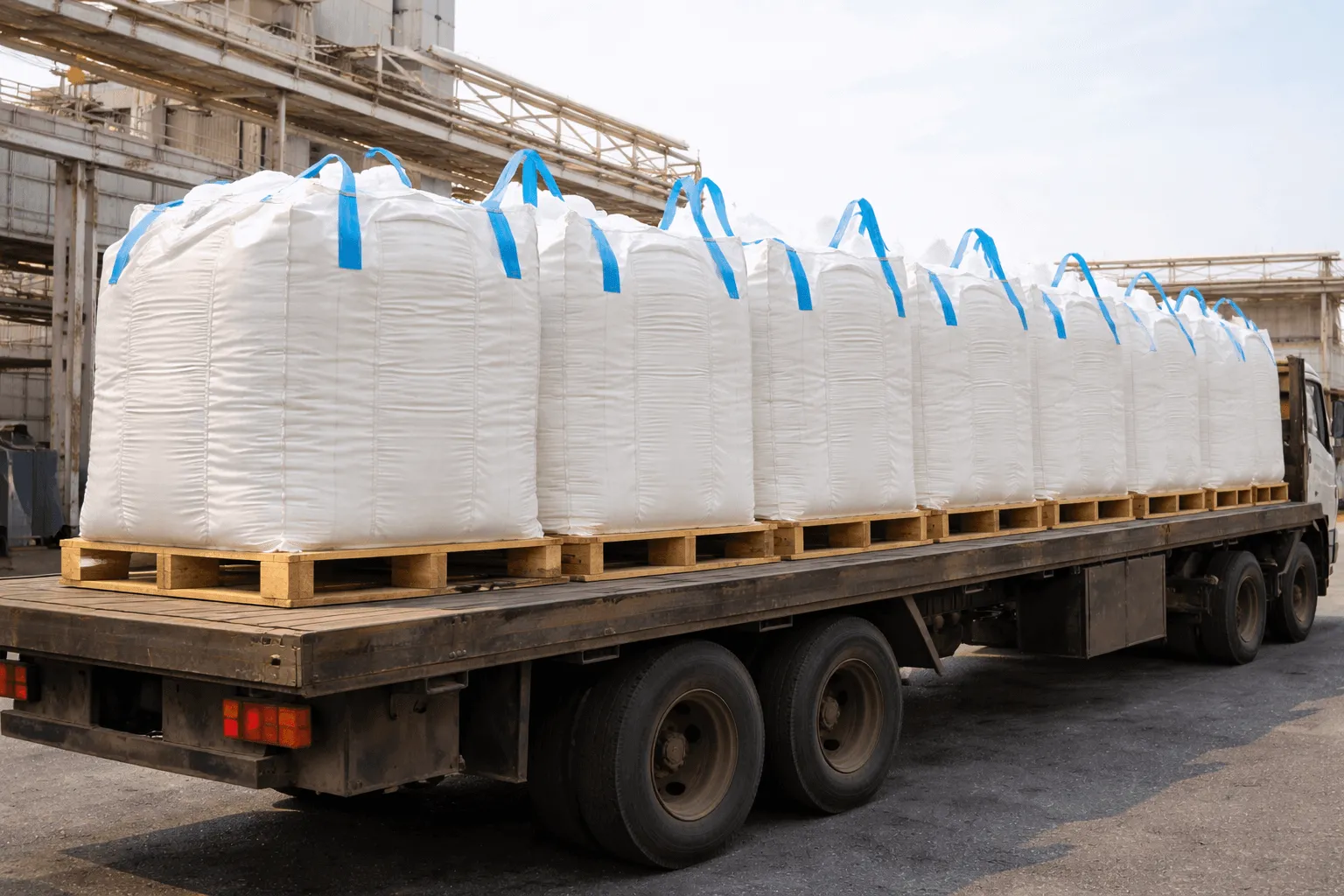
If your business handles bulk materials, are you using the most efficient and cost-effective packaging solution available today?
Key Takeaways
- Flexible Intermediate Bulk Containers (FIBC) are large bulk bags used for storing and transporting dry materials such as grains, chemicals, and construction materials.
- FIBCs improve efficiency by reducing handling, storage space and transportation costs compared to traditional packaging.
- They are widely used across industries, including manufacturing, agriculture, construction, and food processing in Malaysia.
- Different FIBC types and custom features allow businesses to optimise packaging based on material and operational needs.
- FIBCs support sustainability through reusability and recyclability, making them a practical choice for modern industrial packaging.
Across manufacturing, agriculture, chemicals, food processing, and construction sectors in Malaysia, companies are increasingly turning to Flexible Intermediate Bulk Containers (FIBC) to move, store, and protect bulk goods safely and efficiently.
Often referred to as bulk bags or jumbo bags, FIBCs play a critical role in modern industrial packaging and flexible packaging systems. Yet, many businesses still underestimate how versatile and customisable these containers can be—or how choosing the right FIBC impacts operational efficiency, safety, and cost.
This guide explains what flexible intermediate bulk containers are, how they are used, the different types available, and why they have become a cornerstone of industrial packaging in Malaysia.
What Are Flexible Intermediate Bulk Containers (FIBC)?
Flexible Intermediate Bulk Containers (FIBC) are large, flexible packaging bags designed for transporting and storing dry, flowable bulk materials. They are typically made from woven polypropylene fabric and engineered to carry loads ranging from 500 kg to 2,000 kg, with some heavy grade FIBC even up to 8,000kg, depending on design and safety factor.
FIBCs are widely used to package materials such as:
- Powders and granules
- Agricultural products (rice, fertiliser, seeds)
- Construction materials (cement, sand, aggregates)
- Chemical resins and pellets
- Food-grade ingredients
Their strength, flexibility, and adaptability make them a preferred solution in industrial packaging applications where efficiency and safety are paramount.
Why FIBCs Are Essential in Modern Industrial Packaging
Traditional rigid containers, drums, and sacks often fall short when handling large volumes. FIBCs offer a more flexible and scalable alternative.
Key advantages include:
- High load capacity with minimal packaging weight
- Efficient use of storage and transport space
- Reduced handling and labour requirements
- Compatibility with forklifts and cranes
For industries operating at scale, flexible intermediate bulk containers streamline logistics while lowering overall packaging costs.
How FIBCs Fit into Flexible Packaging Solutions
While flexible packaging is often associated with consumer goods, it plays an equally important role in industrial environments.
FIBCs represent industrial-grade flexible packaging, offering:
- Adaptability to different product characteristics
- Customisable dimensions and construction
- Foldability for space-saving storage when empty
This flexibility allows manufacturers and distributors to tailor packaging to their specific material flow and handling processes.
Common Industries Using Flexible Intermediate Bulk Containers
In Malaysia, FIBCs are widely adopted across multiple sectors:
Manufacturing and Processing
Used for raw materials, intermediates, and finished bulk products.
Agriculture and Plantation
Ideal for fertilisers, grains, animal feed, and agricultural by-products.
Construction
Used for cement, sand, aggregates, and dry construction materials.
Chemical and Plastics
Suitable for resins, polymers, and non-hazardous chemical powders.
Food and Beverage
Food-grade FIBCs support hygienic bulk handling when manufactured to appropriate standards, including offshore FIBC and encasement solutions such as FabriFlex, subject to specification confirmation.
Types of Flexible Intermediate Bulk Containers
Not all FIBCs are the same. Choosing the right type depends on material characteristics, handling method, and safety requirements.
1. U-Panel FIBC
Constructed from three or four panels, offering good load stability and cost efficiency.
2. Circular (Tubular) FIBC
Made from a single tubular fabric body, reducing seam stress and improving strength.
3. Four-Panel FIBC
Provides excellent shape retention and stacking stability, ideal for warehouse storage.
FIBC Design Features and Components
Understanding FIBC construction helps ensure the right packaging choice.
Fabric
Woven polypropylene provides strength, flexibility, and durability.
Lifting Loops
Designed for forklift or crane handling, with various loop configurations.
Filling and Discharge Options
- Open top
- Spout top
- Flat bottom
- Discharge spout
These features improve filling efficiency and controlled emptying.
Safety Considerations in FIBC Use
Safety is a critical factor in industrial packaging, especially when handling heavy loads.
Key safety elements include:
- Safety factor ratings (e.g. 5:1 or 6:1)
- Proper lifting equipment
- Compliance with handling guidelines
- Clear labelling and load limits
Correct FIBC selection and usage significantly reduce workplace risks.
Standard vs Custom FIBCs
While standard FIBCs suit many applications, customisation can enhance performance.
Custom FIBCs may include:
- Specific dimensions
- Anti-slip or coated fabric, including anti-static FIBC options
- Liners for moisture protection
- Printing and branding
Custom solutions ensure packaging aligns with operational needs, not just capacity requirements.
Environmental Considerations and Sustainability
Sustainability is increasingly important in industrial packaging decisions.
FIBCs support sustainability by:
- Reducing packaging waste compared to single-use sacks
- Being reusable for multiple cycles (depending on safety rating)
- Being recyclable at end of life
Reusable FIBCs help businesses reduce their environmental footprint while maintaining efficiency.
Storage, Handling, and Transportation Benefits
FIBCs improve logistics efficiency by:
- Optimising container and truck space
- Reducing packaging volume when empty
- Allowing mechanised handling
These advantages translate into lower transportation costs and faster turnaround times.
How to Choose the Right FIBC for Your Business
When selecting flexible intermediate bulk containers, businesses should consider:
- Type of material being stored or transported
- Required load capacity
- Filling and discharge methods
- Storage and stacking requirements
- Regulatory or industry standards
Consulting with an experienced industrial packaging provider ensures the FIBC design matches both product and process requirements.
Why FIBCs Are a Smart Investment for Malaysian Businesses
For Malaysian manufacturers and exporters, Flexible Intermediate Bulk Containers (FIBCs) support efficient bulk handling, export-ready packaging, improved control over logistics costs, and enhanced workplace safety.
As supply chains continue to grow more complex, flexible packaging solutions like FIBCs provide the adaptability businesses need to remain competitive and operationally efficient. At the same time, partnering with Malaysian manufacturers such as FabriFlex helps support local and Southeast Asian communities, contributing to regional economic growth and sustainable industry development.
Final Thoughts: The Role of FIBCs in Modern Industrial Packaging
Flexible Intermediate Bulk Containers have become a cornerstone of modern industrial packaging and flexible packaging systems. Their strength, versatility, and cost-efficiency make them indispensable across industries handling bulk materials.
Whether you are optimising storage, improving transport efficiency, or upgrading packaging safety, the right FIBC solution can deliver measurable operational benefits.
By understanding the types, features, and applications of FIBCs, businesses in Malaysia can make informed packaging decisions that support growth, efficiency, and sustainability in the long term.
From oil & gas to manufacturing and logistics, Fabriflex delivers dependable industrial packaging solutions built for demanding environments.
Discover how our solutions support your industry.